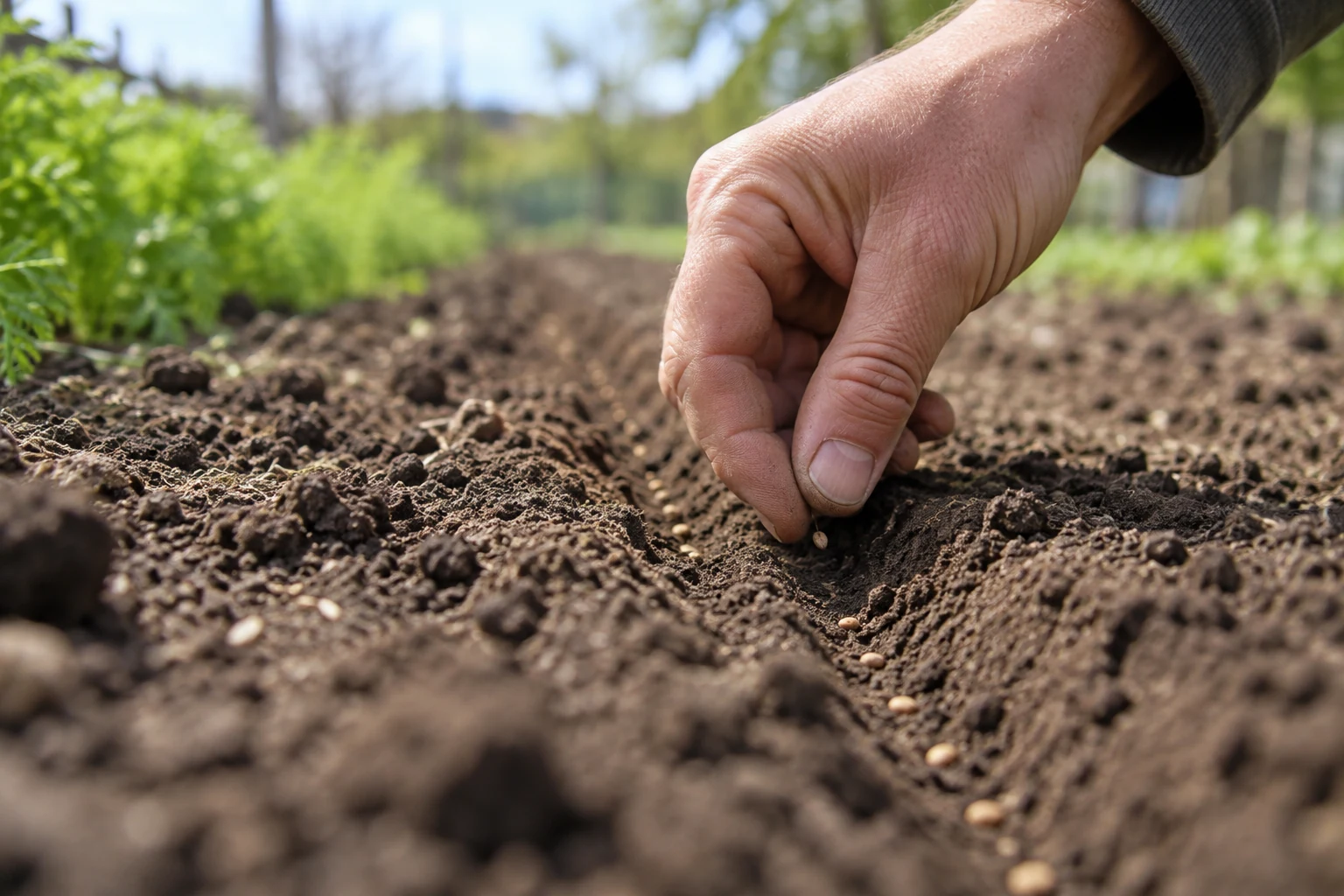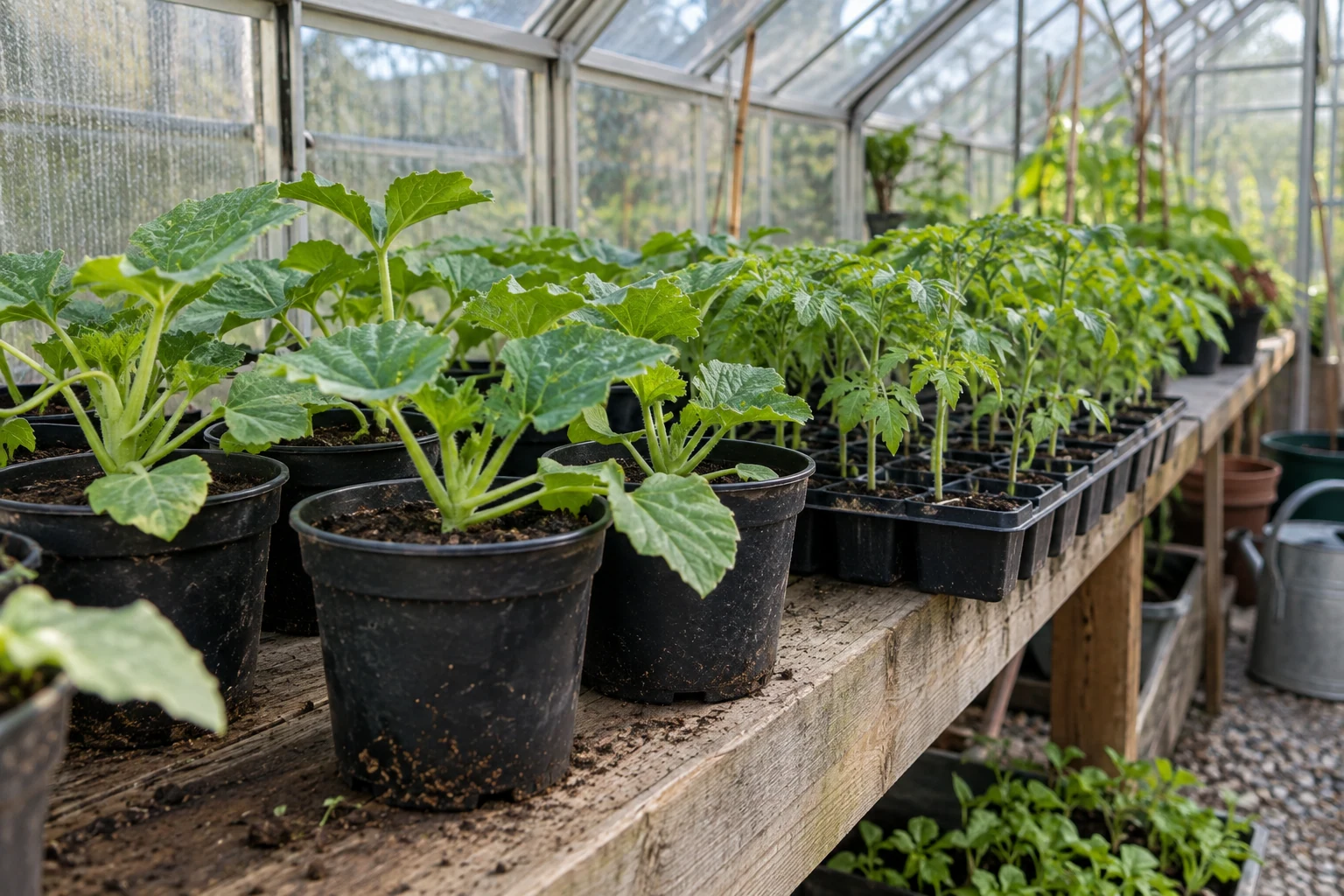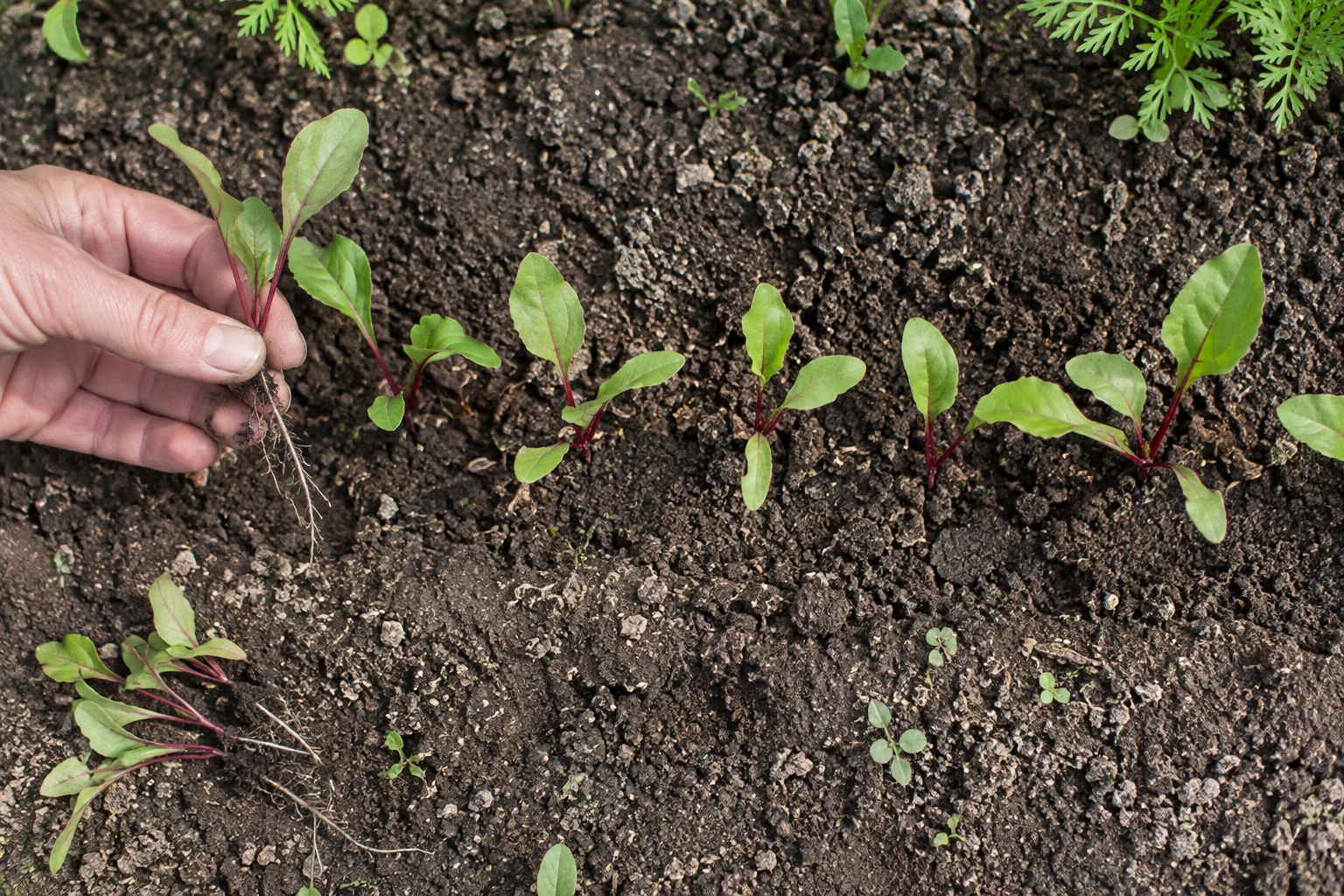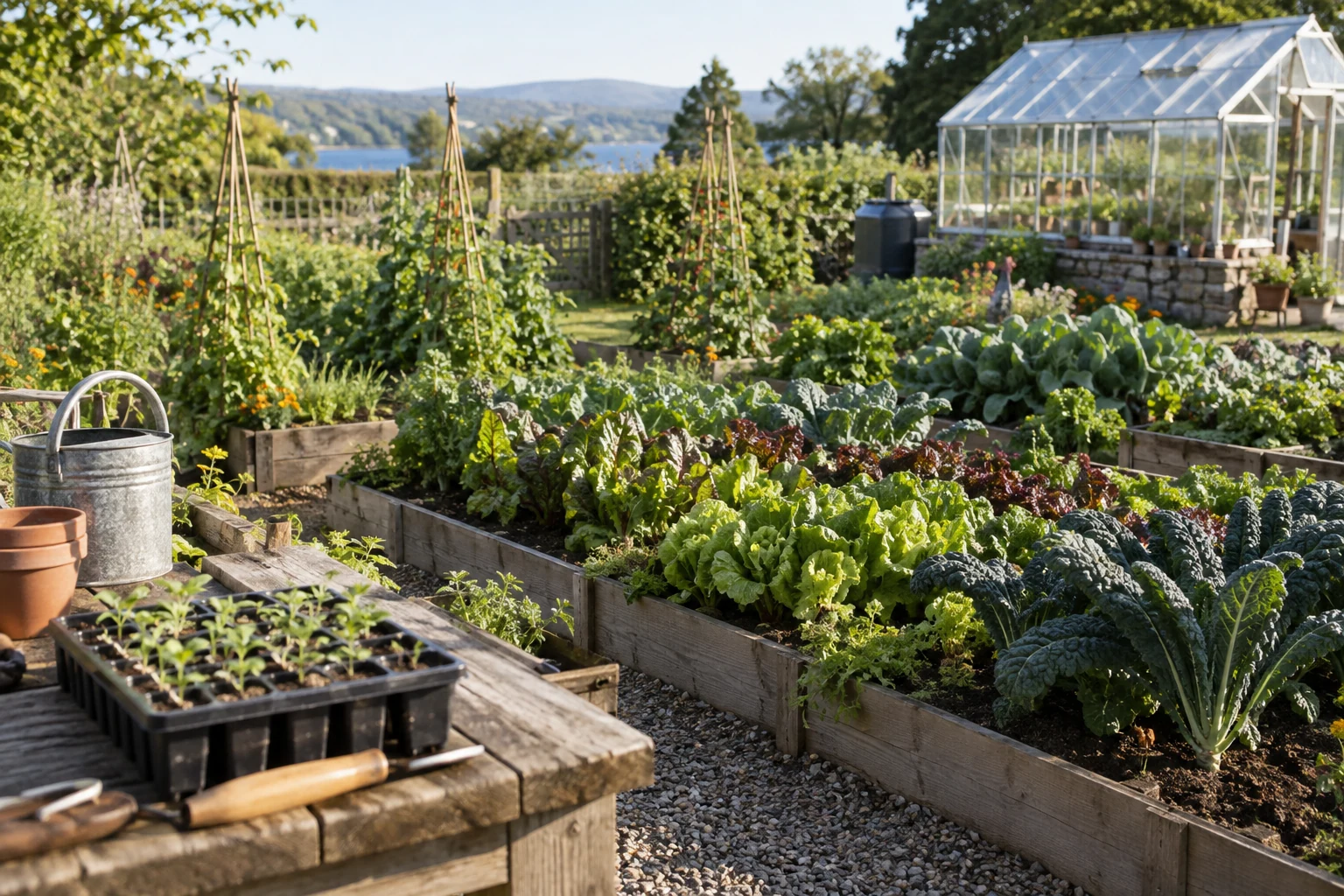
Growing vegetables from seed gives you a wide choice of crops for spring and summer. Most vegetables are started from seed each year, although asparagus, globe artichokes and rhubarb are exceptions. For crops such as lettuce, radishes, carrots and chard, repeated small sowings can help keep harvests coming. ## Plan a sequence of sowings Build your sowing plan around the vegetables you want to harvest repeatedly. Instead of treating sowing as one large spring job, set aside several opportunities to start small batches. The source describes a season that begins with protected salad sowings in February and continues into autumn with broad beans for the following summer. It also gives a specific winter option under cover: broad beans ‘The Sutton’ and ‘Aquadulce Claudia’ can be sown from November to January for a late May–June crop. Keep those protected sowings separate from your outdoor schedule. ## Match the starting place to the crop Carrots and parsnips are sown outdoors where they will remain until harvest. Leeks can be started outdoors and moved to their final positions later. Other vegetables begin indoors or under cover before being planted out, or stay protected as they grow. Sowing straight into the prepared bed where a crop will mature is called direct sowing. ## Use stations for individual plants Station sowing gives you a clear place for each eventual plant. Mark the intended positions, using a grid if helpful, then sow two or three seeds at each point. After emergence, select the healthiest seedling and remove its competitors. Think of the station as the location of one finished plant, rather than a permanent cluster. Final spacing depends on the vegetable; use the seed packet to guide the layout. ## Choose containers for the next stage Decide whether your seedlings will move into another container or go outside. Seed trays suit plants that will be moved on, while cell trays allow seedlings to be transplanted with less disturbance to delicate roots. Small pots and reused produce punnets are also options, provided they have drainage holes. Give larger seeds, including broad beans, deeper individual containers such as cardboard tubes. Start seedlings with fresh compost each year; put older compost to use alongside fresh material in containers for more mature plants. ## Make use of protected growing space Courgettes, pumpkins, squash, tomatoes, sweetcorn and cucumbers can be started in a greenhouse or polytunnel in spring or early summer for later outdoor planting. Plants destined for outdoors need hardening off first. Aubergines, glasshouse tomatoes, melons and cucumbers can remain under cover for the season. Protection also allows earlier and later sowings of chard, coriander, lettuce, parsley and radish. These can be started in greenhouse borders or containers without additional heat. ## Try clusters for smaller vegetables Multiblock sowing offers a different approach from raising one plant at each station: seedlings grow together in small groups. Suitable crops include beetroot, chives, round carrots, leeks, parsley, onions and turnips. Fill a module tray with peat-free compost, water with a rose attachment and let the compost settle. Make a shallow depression in each cell, add three to five seeds and cover with a thin layer of grit. Once the seedlings develop their first true leaves, plant each cell as a group at the spacing appropriate to the crop. Use several suitable vegetables across the tray to avoid producing too much of one kind. ## Thin ordinary rows and stations Seedlings in conventional rows or stations need thinning to reduce competition for water and light. Begin when true leaves appear; these resemble the adult plant’s foliage, unlike the first seed leaves. Remove weaker seedlings entirely, or pinch their tops off at soil level. Beetroot, chard and spring onions can be thinned gradually as they grow. The removed plants can be eaten small while those left behind continue towards full size. Seed packets give crop-specific spacing guidance. Keep the two thinning approaches distinct in your plan. A station is intended to leave one selected plant, whereas a multiblock cell is grown and planted as a cluster. Note which method you used before deciding which seedlings to remove. ## Check progress and leave room to resow Include a follow-up check after each sowing. Poor air movement and excessively humid or soggy conditions can be associated with damping off. If seedlings never emerge, weather or poor-quality seed may be responsible. A failed batch need not end the sowing plan. Where there is still an opportunity, try fresh seed; the source notes that resowing within two weeks usually causes little interruption to the sequence of harvests.